
Tarnish-Resistant Jewelry: What the Claim Actually Means (and How to Test It)
"Tarnish-resistant" is one of the most common claims in jewelry marketing, and one of the least explained. It sounds like a guarantee. It isn't: it's a description of degree, and the degree matters more than the label.
What tarnish actually is
Tarnish is a chemical reaction, not dirt. Silver reacts with sulfur compounds in the air (from pollution, rubber, wool, even the sulfur naturally present in your own skin oils and sweat) and forms a thin layer of silver sulfide on the surface. That layer starts as a faint yellow tint and darkens toward black the longer it's left. Humidity speeds the reaction up; dry, sealed storage slows it down. This is true of any silver jewelry, from any brand, at any price point: it's chemistry, not a manufacturing defect.
What "resistant" actually buys you
Tarnish resistance usually comes from one of two places: a higher-purity alloy that has less reactive metal exposed at the surface, or a thin protective layer, commonly rhodium, which does not tarnish and forms a barrier over the silver underneath. Rhodium plating is typically applied at a fraction of a micron to a couple of microns thick. It works well while it's intact, but it's still a layer, not a permanent transformation of the metal: once it wears through from friction and daily contact, the silver underneath is exposed to the same chemistry as any unplated piece.
That's the honest version of "tarnish-resistant": it slows the reaction and, where a protective layer is used, blocks it for as long as that layer holds up. It is not a claim that the piece will never tarnish under any conditions, forever, and any brand implying otherwise is overstating what the chemistry allows.
How to actually test it
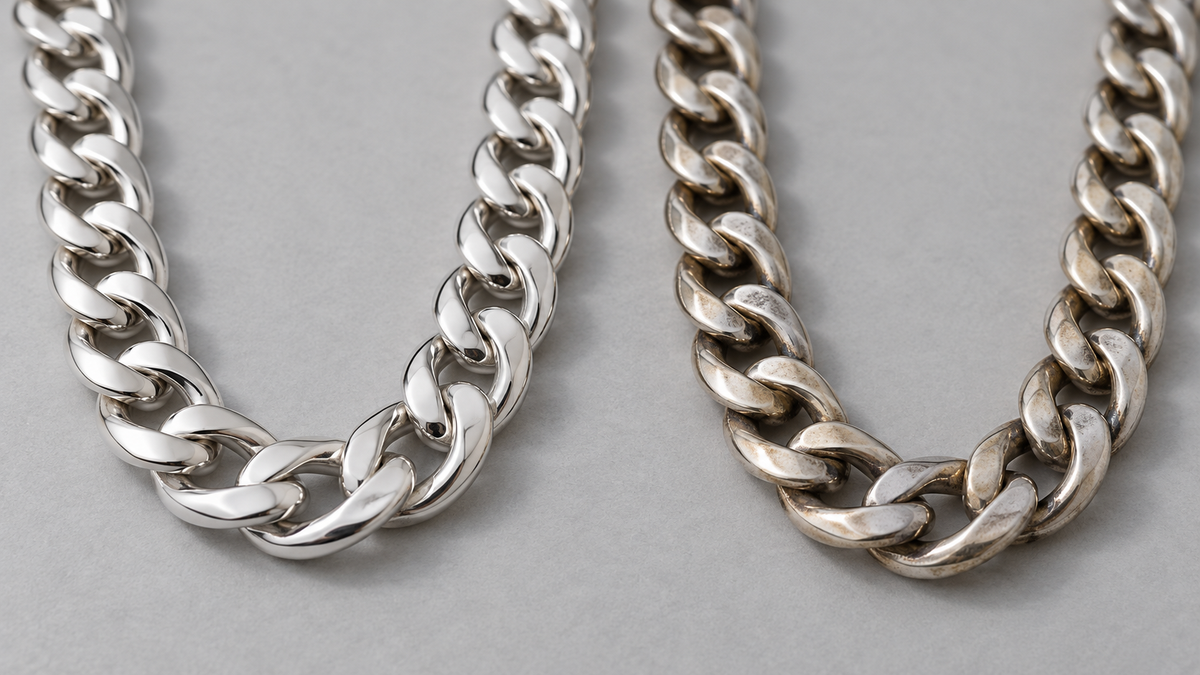
You don't have to take a tarnish-resistance claim on faith. A simple, fair test: wear the piece normally (showering, daily activity, no special treatment) for two to three weeks, then compare it side by side with a plain, unplated silver item (an old chain, a cheap ring) worn the same way over the same period. A tarnish-resistant piece should show a visible difference: less yellowing, less dulling, especially anywhere it doesn't get direct friction (the back of a pendant, the inside of a ring band). If there's no visible difference at all after a few weeks of identical wear, the resistance claim isn't doing much.
A second, quicker check: breathe on the piece the way you'd fog a mirror, right after it's been freshly polished, then let it sit in a closed drawer for a week without wearing it. Faster tarnishing in storage than you'd expect from the claim is a sign the resistance is mostly marketing.
What this means on MIRNE pieces
MIRNE's 925 sterling silver and 18K gold-plated pieces are tested before they ship, and the tarnish-resistant claim on the site is describing the standard mechanism above, not a claim that any piece is immune to tarnish forever regardless of care. The practical difference-maker is still yours to control: how it's stored between wears matters as much as what it's made of. This guide covers storage that actually slows tarnish down, and this one covers safely cleaning tarnish that's already there.
Browse Necklaces and Bracelets, the two categories where tarnish shows up first, since they sit against skin the longest.
