
How to Clean Tarnished Silver Jewelry at Home Without Damaging It
Tarnish looks worse than it is: it's a surface reaction, not damage to the metal underneath, and most of it comes off with the right method. The trouble is that a lot of the internet's favorite "life hack" cleaning methods aren't actually safe for every kind of jewelry, especially plated pieces and anything with gemstones.
What's actually safe
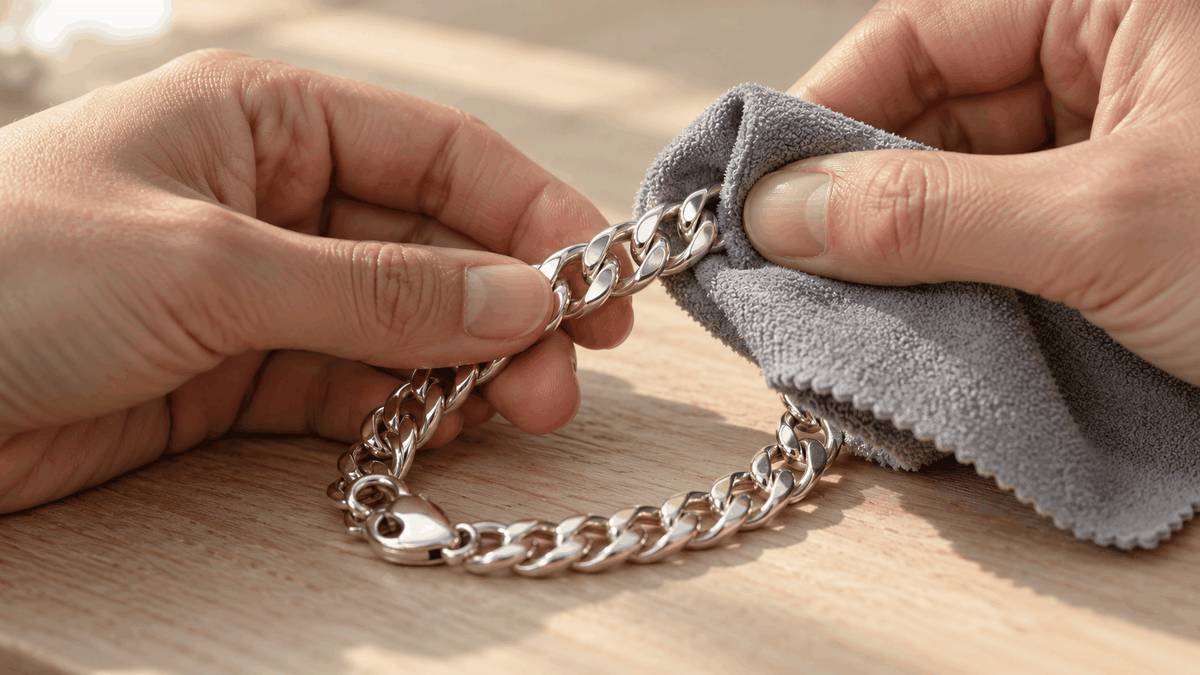
A polishing cloth is the simplest, lowest-risk option, and it's often all you need for light tarnish: a soft, slightly abrasive cloth made for silver, used with gentle pressure, lifts surface tarnish without removing metal you want to keep. Keep one on hand and use it before tarnish builds up, not just after.
Mild soap and warm water works well for both sterling silver and gold-plated pieces: a few drops of gentle, unscented dish soap in warm water, a soft cloth or very soft-bristled brush for detail work, then a thorough rinse and immediate dry with a soft towel. Never let a piece air-dry: sitting wet is exactly the humidity that speeds up tarnish.
A baking soda paste (baking soda mixed with a small amount of water) can help with more stubborn tarnish on solid, unplated sterling silver, applied gently with a soft cloth, then rinsed and dried thoroughly. This one comes with a real caveat: baking soda is mildly abrasive, which is fine on solid silver but can wear through a thin gold-plated layer faster than normal handling would. Skip it on plated pieces and anything with soft or porous gemstones.
What to skip
Toothpaste is a widely repeated cleaning hack that's actually a bad idea for most jewelry: most toothpaste is more abrasive than baking soda, and the whitening varieties are worse. It can dull a polished finish and, on plated pieces, wear through the gold layer noticeably faster than intended.
Ultrasonic cleaners are excellent for solid, gemstone-free sterling silver, but they're a real risk for plated jewelry and for pieces with certain gemstones: the vibration can loosen plating at the edges or stress-fracture more delicate stones. If a piece is gold-plated or set with anything other than a hard, securely mounted stone, hand-cleaning is the safer call.
Harsh chemical dips (commercial silver dips, anything with ammonia or chlorine) work fast because they're aggressive, which is exactly the problem on plated jewelry, where "fast" tarnish removal can mean fast plating removal too.
Prevention does more than any cleaning method
The single biggest lever isn't how you clean tarnish: it's how much of it you have to clean in the first place, which comes down almost entirely to storage between wears. This guide covers storage that meaningfully slows tarnish down, which means less frequent cleaning and less cumulative wear on any plating.
Every product page also has a Care tab with piece-specific guidance, worth checking before cleaning anything set with a gemstone. Browse Necklaces and Rings.
